01
Intelligence
Capture what people notice, protect meaning and build evidence-backed Themes.
From many signalsCommon Ground is a three-layer problem-solving system. It begins by turning scattered local observations into shared intelligence, then carries qualified opportunities towards supported, youth-owned execution.

Each layer has one job, one accountable operator and a clear handover. That keeps the public app trusted and the execution environment focused.
Capture what people notice, protect meaning and build evidence-backed Themes.
From many signalsSecure access, assemble teams, agree fair ownership and resource a credible test.
To shared readinessGive committed young teams the structure and backing to own and operate solutions.
To lasting ownershipThe initial programme develops a culture of problem definition, tests multiple participation channels, improves AI-assisted clustering through real cases and creates a trustworthy handover into expert analysis and opportunity design.
See how Layer 1 worksYoung people should not have to rebuild the evidence, relationships, legal structure and support environment from zero every time Gozo needs something.
The whole model works because its boundaries are explicit.
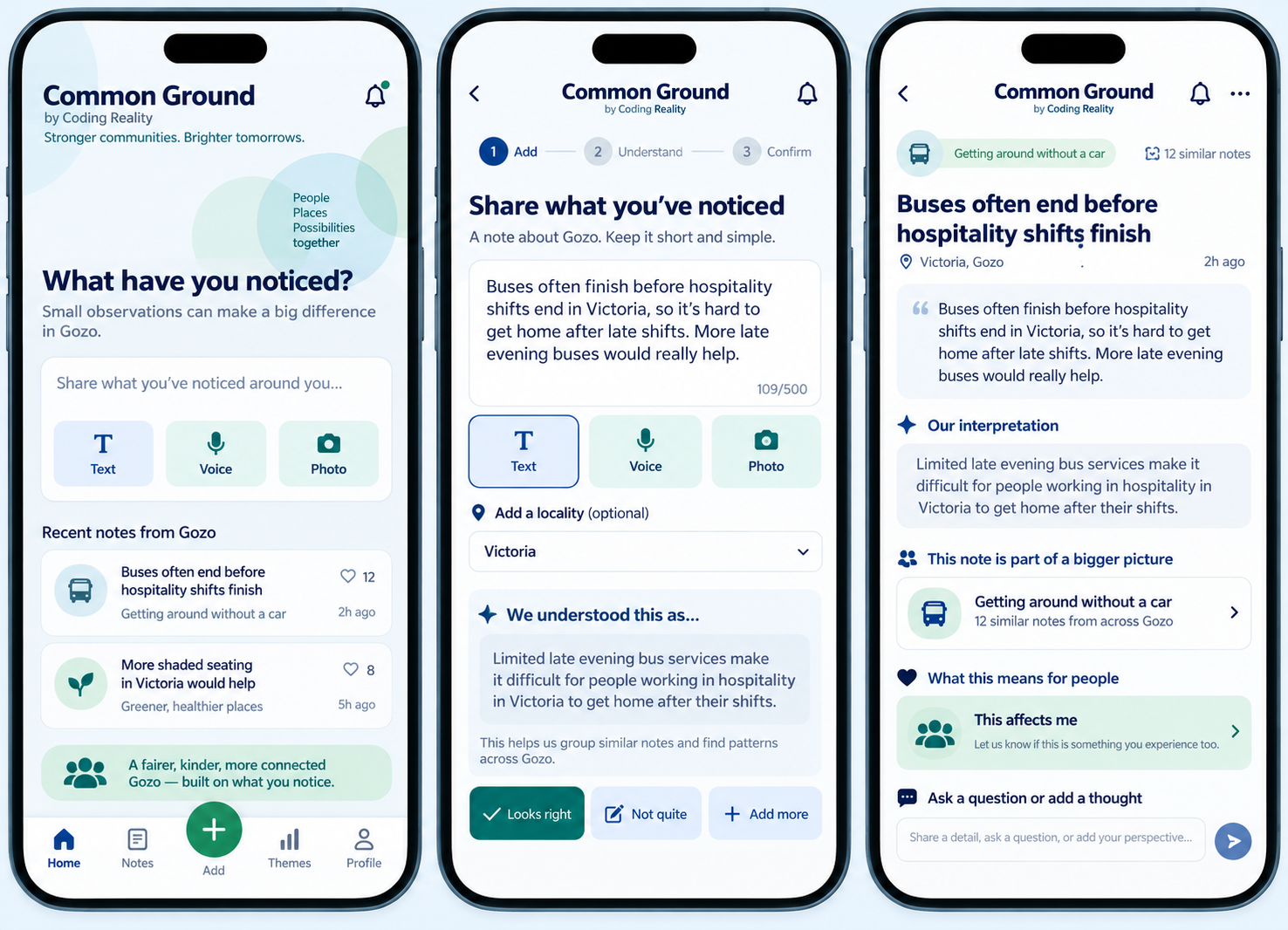
A public, privacy-aware place to capture lived experience, connect related evidence and keep contributors informed.
The Common Ground Entrepreneurship Hub turns a qualified signal into a fair, supported and execution-ready opportunity.
Open question and evidence brief
People, data and decision-makers
Complementary paid youth team
Ownership, IP and safeguards
Specialists, tools and facilitation
Pilot budget and funded next step
The Hub does not give young people another blank page. It gives them evidence, access, fair terms and immediate assistance so execution can begin.
The evidence decides the vehicle. The committed young executors own the resulting project and its solution-specific intellectual property.
The intelligence layer gathers distributed signals, protects their meaning and turns volume into structured questions that people and experts can investigate.
Participation meets people where they already communicate. Public comments are treated as leads that require context and confirmation—not as verified evidence.
Process large volumes, find recurring language and conditions, and propose clusters without deciding what is true.
Preserve original statements, invite confirmation, and keep contradictions, confidence and open questions visible.
Bring affected people, operators and specialists together to distinguish symptoms, causes and practical constraints.
Specify users, evidence, partners, risks and success criteria before designing a test or handing it to the Hub.
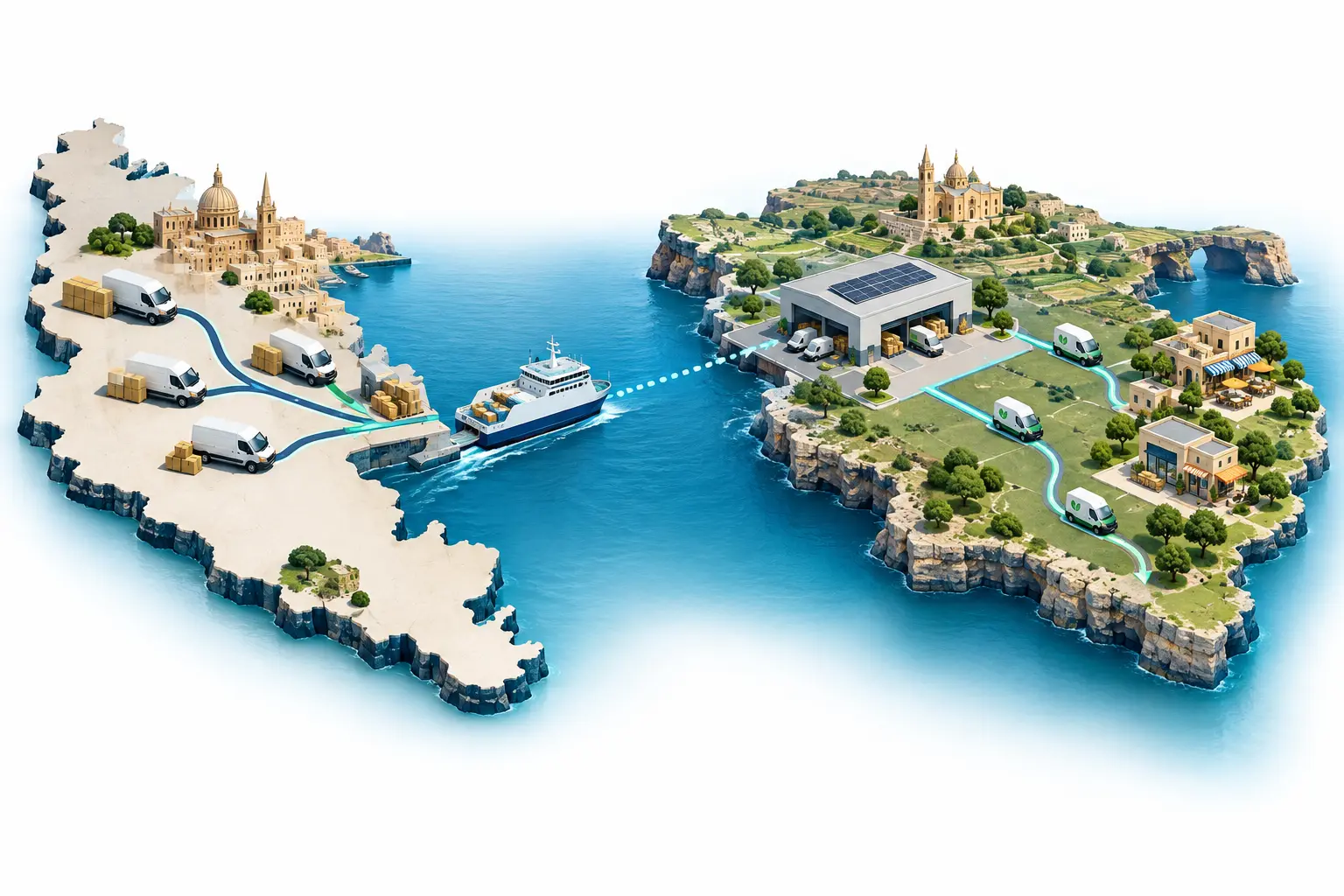
A former GRDA chief executive reportedly estimated that approximately 75 distributors travel from Malta to Gozo each day with loads averaging about 1 m² because managed local storage is missing. Common Ground would not begin by building a warehouse; it would begin by defining the problem.
A small visitor question can be a service signal. Common Ground keeps the original suggestion lightweight, then looks for repetition before anybody assumes that a business should exist.
“Where can I safely leave my belongings while I swim?”
Related reports may indicate demand for secure, managed beach lockers—but location, seasonality, liability and willingness to pay still require validation.
“Can I rent a towel near this beach?”
Clustering can reveal where the question repeats. Councils, beach operators and visitors can then test whether rental, deposit-return or another response fits.
Its durable asset is reusable execution capacity: trusted evidence, partner relationships, governance templates, specialists, shared services and alumni.
Organisations fund a defined problem-to-execution process.
Anchor partners sustain intelligence, readiness and response capacity.
Independent ventures purchase accounting, legal, technology or operational support.
Only after revenue begins, a capped contribution can repay launch support.
Funds access, learning and experimentation rather than permanent dependency.
Use one real case to improve collection, interpretation, clustering, field analysis and handover—then carry the strongest opportunity through a responsible partner and, ultimately, the Hub.
A focused need connected to Gozo.
People, evidence and a responsible decision-maker.
Fair participation and the smallest credible pilot.